Mostrando entradas con la etiqueta flowers. Mostrar todas las entradas

Oleander - Flowers


Oleander A beautiful old-time favorite, with fragrant blossoms of
red, pink, yellow or white. Give a very rich soil and plenty of water
when growing. Rest after flowering. Cuttings are rather hard, but will
root with care.

Lemon Verbena - Flowering Plants


Lemon Verbena (Aloysia citriodora) Many people consider this the
most delightfully fragrant plant grown. Certainly no window garden
should be without it. Early in September cut back old plants, if in the
garden
, and pot up. New growth will quickly be made. Plants kept in pots
should be rested in early winter by keeping dry and cool. Spring
cuttings root easily.

Lemon - Flowers


Lemon - The best lemon for house culture is the Ponderosa, or American
Wonder, of comparatively recent introduction. Most florists now have it.
Easily grown and a very attractive plant. The fruit is good to use.

Lantana - Flowers


Easily grown flowering shrub, trailing in habit, with small
flower clusters of white, pink, red, yellow or orange. New dwarf
varieties best for pot culture. Cuttings root easily. I have never cared
for this plant, and its odor is not pleasant to most people.

Flowers - H. Hortensias


H. Hortensia Japonica is the blue flowering variety; the color will
depend much, however, upon the soil. To make sure of the color, dissolve
one pound of alum in two quarts of ammonia, dilute with twenty gallons
water and use as a liquid fertilizer. Thomas Hogg is a beautiful pure
white, quite hardy. _H. h._ Otaksa, pink, is one of the most popular.

Hydrangea


This is another popular flowering shrub, often had in bloom
inside in the spring, but personally I do not consider it suited for
such use. The flowers are rather coarse to bear close inspection, such
as a house plant must be subject to: they are far more effective in
masses out-of-doors or used as semi-formal decorations about paths or
stoops, for which purpose they are unsurpassed.


If you care to have them bloom indoors, get small plants from the
florist, or start cuttings of new growth in spring, taking shoots which
do not have buds. After flowering, cut back each branch and grow on, in
a cool airy place with slight protection from noonday sun. Take into the
house before frost, and gradually dry off for a rest of six weeks or
more in a cold room. Then start into growth.

Plants for flowering early in the spring outdoors should be treated in
the same way during summer, and wintered in the cellar, as directed
above. Take up to the light any time after first of March in the spring,
but be careful to harden off before setting outside.

The varieties of the hydrangea are several, some being entirely hardy
farther north than New York, but the sorts best for house and tub
culture are not. Most of them will come through some winters, but it
doesn't pay to take the chance.

Hibiscus


One of the most brilliant flowering shrubs outside of the
azaleas, with single and double flowers. Give a warm, sunny spot. Large
plants can be stored in the cellar. Cuttings in spring or summer will
furnish new plants.

Grevillea robusta


The Silk Oak is grown with the greatest ease and
makes an extremely graceful, beautiful plant, either by itself or as a
center for fern dishes, etc. Sow in March and grow on with frequent
shifts.

Genista


A beautiful evergreen shrub, bearing freely in spring
clusters of pea-shaped yellow flowers, richly fragrant. Cut back after
flowering, and in fall put in a cold room, forty degrees, or a frame,
giving several weeks rest. Cuttings may be rooted readily in spring,
when pruning the plants.

Daphne


is easily grown and very fragrant. As ornamental as
orange or lemon and very free flowering. Give almost no water in winter,
or store in cellar. Plants good for many years.

Browallia


A very attractive flowering shrub, easily grown in a cool
room, with plenty of sunlight. Sow seeds in 4-inch pots in August,
thinning to three or four. Repot to 6 inches. Cuttings make good plants.
Best grown as standards.

Pansy, Salvia, Piqueria or Stevia serrata, Stocks - FLOWERING PLANTS


Pansy --If wanted for winter blooming, take cuttings or start from
seed, as described for Daisy (_Bellis perennis_). The seed bed must be
kept cool and shaded.


Salvia --One of the most brilliant of all flowering plants. For winter
make cuttings in August, or take off suckers with roots at base of
plant. They like heat. Keep thoroughly sprayed to ward off red spider.

Piqueria or Stevia serrata --Another fragrant flower. Root cuttings in
January or February and grow on for blooming from November to February.


Stocks --What I said about snapdragons on page 64 might well be
repeated here. Start from seed in August or September. They are very
easily grown. In addition to their beauty--they resemble a spray of
small roses--is their entrancing fragrance. Only the double sorts are
good. There are many fine new sorts. Abundance, a beautiful delicate
pink, will be sure to arouse your enthusiasm.
Blogalaxia Tags:

Daisies, Daisy - FLOWERING PLANTS,


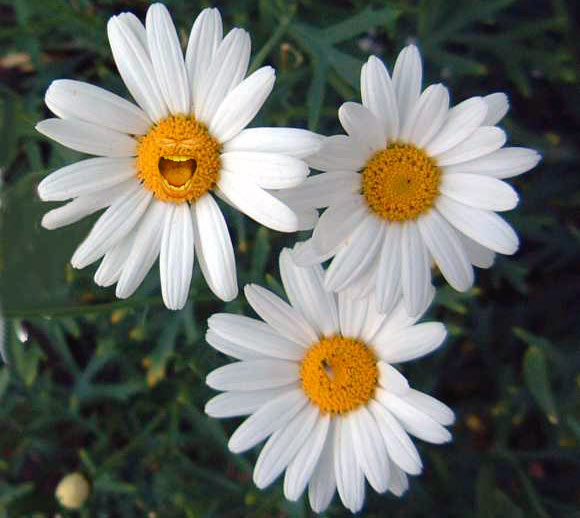
Daisies , Double English Daisies--The bright little short-stemmed
daisies, seen so frequently in spring (_Bellis perennis_) are not often
used as a house plant, but make a very agreeable surprise. Start from
seed in August; transplant to boxes of suitable size, and on the
approach of freezing weather cover gradually with leaves and rough
manure or litter in a sheltered, well drained place. Bring them in as
wanted from January on.

Daisy , Paris or Marguerite--Beautiful daisy-like flowers, very freely
borne, in two colors, pure white and delicate yellow. Root cuttings in
spring and keep pinched back for winter flowering. Grow in rather heavy
rich soil, with plenty of water.

OTHER FLOWERING PLANTS


Ageratum --Valuable for its bright blue flowers and dwarf growth, going
in well with other plants. There is also a white variety. Make cuttings
in August, or cut back and pot up old plants.


Alyssum --Good with other plants to produce a light bouquet-like
effect. White. Fall and dwarf varieties. Seed or cuttings.


Balsam --Beautiful colors. Take up and pot after blooming in garden.
Only double sorts worth while.


Candytuft --Colors. Good for cut flowers. Seed or cuttings.


Cannas --New dwarf hybrids, named varieties have beautiful flowers.
Give rich soil, lots of sun and water. Dry off after flowering.

Snapdragon - FLOWERING PLANTS


I feel somewhat doubtful about giving this comparatively little known
flower a place among the especially recommended plants. Not on the basis
of my own experience with it, but because in the several books in my
possession which deal with house plants, I do not find it mentioned.
There certainly can be no question that the long spikes of flowers in
pure white, light and dark reds, deep wines and clear yellows, with
combinations of two or more of these in many cases, are among our most
beautiful flowers. They stay in blossom a long time, each stalk opening
out slowly from the bottom to the top of the spike, like a gladiolus.
They seem, in my own experience at least, to stand almost any amount of
abuse; this spring several old plants that I had abandoned to their fate
insisted on coming to life again and trying to vie with their younger
progeny in flowering.

Snapdragons are easily raised from seed, or propagated by cuttings. For
winter blooming sow the former in March or April, grow on in a cool
place and keep pinched back to make bushy plants. If you have limited
room, let one stalk blossom on each plant, so that you can avoid
selecting duplicates. Cuttings may be taken at any time when the weather
is not too hot. Take the tops of flowering shoots which have not yet
matured so far as to become hollow.

The varieties have been greatly improved, that now sold as
Giant-flowered Hybrids being the best. There is also a dwarf type and of
still later introduction a double white. This will undoubtedly break
into the other colors and give us a valuable new race.

With the directions given for the foregoing, and also on pages 6 to 50,
the following brief instructions should be necessary to enable success
with the other flowering plants which are worth trying in the house for
winter blooming.

Primroses - flowers


Of the deservedly popular primrose there are two types, the Chinese
primrose (_Primula Sinensis_) and _Primula obconica_. Both are
favorites, because of their simple beauty and the remarkable freedom and
constancy with which they bloom. Another advantage is that they do not
require direct sunlight. Primroses need no particular care. The soil may
have a little extra leaf-mould and should slope toward the edges of the
pot, to prevent the possibility of any water collecting at the crown of
the plant, which must be left well above the soil when potting.

The easiest way to get plants is to buy small ones from the florist
every spring. They may be raised from seed successfully, however, if one
will take care to give them a shaded, cool location during the hot
summer months, such as a coldframe covered with protecting cloth, or any
light material that will freely admit air. From seed sown in February
or March they should be ready to bloom by the following Christmas. It
does not pay to keep the plants over for a second season.

There are numerous varieties. One very small sort, _P.
Forbesi_--sometimes called Baby Primrose--is exceedingly floriferous.
Several plants of this sort put together in a large pan make a most
beautiful sight, and will do well as a decoration for a center table.

Until recently _P. obconica_ was inferior in size of flower to the
Chinese primrose, but the newer strains, under the name _P. grandiflora
fimbriata_, or Giant Fringed, are quite wonderful. Some of the
individual flowers are over an inch and a quarter across, and range from
pure white to deep rose. If you cannot obtain other plants of this type
from your florist they will well repay the trouble of starting from
seed.

Petunia - FLOWERING PLANTS


The petunia is one of the most easily grown and generous bloomers of all
house plants. It is, however, a little coarse and some people object to
its heavy odor. The flowers are both single and double, each having its
advocates. Both have been vastly improved within the last few years.
Certain it is that some of the new ruffled giant singles are remarkably
beautiful, even as individual flowers; and the new fringed doubles,
which come in agreeable shades of pink, variegated to pure white
(instead of that harsh magenta which characterized the older style)
produce beautiful mass effects with their quantities of bloom.

They are grown either from seed or cuttings, the latter frequently
blooming in the cutting box, if allowed to. In raising seedlings, be
sure to save all the slowest growing and delicate looking plants, as
they are fairly sure to give some of the best flowers, the worthless
singles growing strong and rank from the start. Plants growing outdoors
during the summer may be cut back, potted up and started into new
growth. The singles bloom more freely than the doubles, especially
indoors. After blooming, cut the plants back to within a few inches of
the root, repot or give liquid manure and a new growth will be sent up,
and soon be in blossom again.

Heliotrope - FLOWERING PLANTS


The heliotrope has long been the queen of all flowers grown for
fragrance. It is grown readily from either seeds or cuttings; the latter
generally rooted in the spring. For blooming in winter, start young
plants in February, or cut back old ones after flowering, and keep
growing but pinched back and disbudded, in partial shade during the
summer.

There are several varieties, from dark purple to very light and white.
Lemoine's hybrids have the largest flowers, but are not so fragrant as
some of the smaller sorts.

By pinching off the side shoots and training to a single main stalk, the
plants may be grown as formal standards, with the flowering branches
several feet from the pot, like the head of a tree. For certain uses
they are appropriate, but I think not nearly as beautiful as when well
trimmed to shape and grown in the ordinary way.

The heliotrope objects to any sudden change, whether of temperature,
watering or soil, and will readily turn brown and drop all its leaves.
Giving it proper care and cutting back, however, will quickly bring it
into good humor again.

The Pelargoniums (Pansy Geraniums)


This section contains the most
wonderful flowers of all the geraniums. Imagine, if you can, a rather
graceful shrub with attractive foliage, eighteen inches or so high and
broad, covered with loose clusters of pansies in the most brilliant and
harmonious contrasts of color, and the most delicate blendings of
rare shades, such as snow white and lilac. Unfortunately, these
marvelous blossoms remain but a few weeks at most, and then there is a
year's care and waiting. As with the fantastic cacti, all their
blossoming energy and beauty seems to be concentrated into one brief but
glorious effort. It certainly is to be hoped that the new strain,
mentioned on a former page, will successfully be developed. Pelargoniums
are propagated by cuttings, and cared for as the ordinary geraniums,
except that they should be kept very cold and dry during their winter
resting spell. Cut back after blooming.

Sweet Scented Geranium


This type has two valuable uses; their
delicious fragrance and also the beauty and long keeping quality of the
leaves when used in bouquets or to furnish green with geranium blossoms.
Rose and Lemon (or Skeleton) are the two old favorites of this type. The
Mint geranium, with a broad, large leaf of a beautiful soft green, and
thick velvety texture, should be better known. All three must be kept
well cut back, as they like to grow long and scraggly.

The ivy-leafed geraniums have not yet come into their own. To me they
are the most beautiful of all. The leaves are like ivy leaves, only
thicker and more glossy. The flowers, which are freely borne, contain
some of the most beautiful and delicate shades and markings of any
flowers, and the vines are exceedingly graceful in habit when given a
place where they can spread out or hang down. Like the common or Zonal
geranium, the ivy-leafed section has within the last few years been
greatly improved. There is space here to mention but one variety
(L'Elegantea), whose variegated white and green foliage, in addition to
its lovely flowers, gives it a wonderful charm.