Mostrando entradas con la etiqueta SHRUBS. Mostrar todas las entradas

Daphne, Genista, Grevillea robusta - SHRUBS


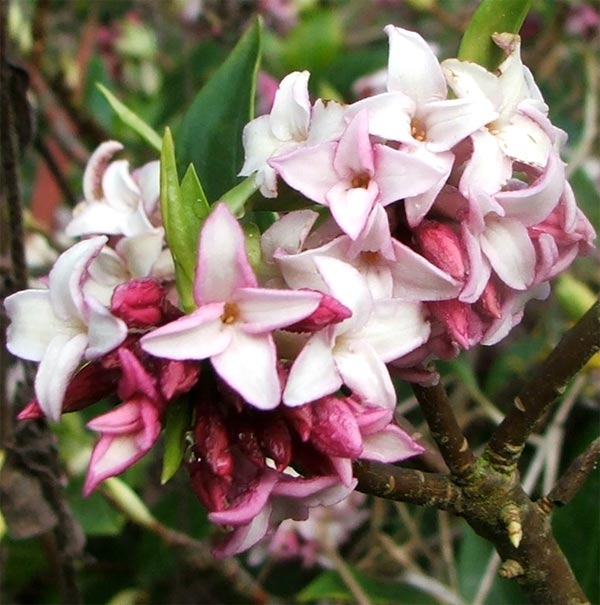
Daphne --_D. odora_ is easily grown and very fragrant. As ornamental as
orange or lemon and very free flowering. Give almost no water in winter,
or store in cellar. Plants good for many years.


Genista --A beautiful evergreen shrub, bearing freely in spring
clusters of pea-shaped yellow flowers, richly fragrant. Cut back after
flowering, and in fall put in a cold room, forty degrees, or a frame,
giving several weeks rest. Cuttings may be rooted readily in spring,
when pruning the plants.

Grevillea robusta --The Silk Oak is grown with the greatest ease and
makes an extremely graceful, beautiful plant, either by itself or as a
center for fern dishes, etc. Sow in March and grow on with frequent
shifts.

Bouvardia, Browallia, - SHRUBS


Bouvardia --Pink, white or red flowers, sweet scented. Propagated by
root cuttings, but as the plants are good for a number of years, the
best way is to get them from the florist. Old plants may be divided,
small enough to go into number three pots. Give either cuttings or
divisions about sixty degrees at night after potting, which should be in
spring, until put outdoors. Keep pinched to shape. Then bloom from late
fall to February.

Browallia --A very attractive flowering shrub, easily grown in a cool
room, with plenty of sunlight. Sow seeds in 4-inch pots in August,
thinning to three or four. Repot to 6 inches. Cuttings make good plants.
Best grown as standards.

B. elata - is especially valuable because of its deep blue flowers.
B.Jamesonii - is orange. Roezlii and Grandiflora, blue or white.

Aucuba, Azalea - SHRUBS


Aucuba --The Gold Dust Plant: one of the beautiful shrubs and
especially valuable for decoration because doing well in such shaded
positions as inner rooms, or by doorways. Strong tip cuttings--six to
ten inches--can be rooted readily in the fall. Give a soil on the heavy
side.

Azalea --The azalea is the most beautiful flowering shrub--if not the
most beautiful of all winter flowering plants. With proper treatment an
azalea should do service for several years, becoming more splendid each
season.

You will probably get your plant when it is in full bloom. At this time,
and during the whole growing season, it requires abundant water. The
best way to make sure of giving it a thorough one, is to stand it for
half an hour in a pail of water. Keep it in a rather cool place, say
forty-five at night, and the flowering season, which should last several
weeks, will be prolonged.

With the azaleas you must do the work for next year's success as soon as
the flowering season is over. After repotting, keep in a temperature of
fifty to fifty-five degrees at night.

There are three types of azalea suitable for winter blooming, the
Indian, Ghent and Mollis, of each of which there are several kinds. The
Indian type has the advantage of not blooming without its leaves, as the
others do. The best way to select the varieties wanted is to purchase
when in bloom. It will not pay the amateur to attempt propagation.

Acalypha, Aralia, Ardisia - SHRUBS


_Acalypha_--Valuable for its variegated foliage. For use in the house
root cuttings in early fall. The old roots, after cutting back, may be
kept on the dry side to furnish cuttings in spring for the garden
plants.

_Aralia_--Aralia (_Fatsia Japonica_) and _A. J. variegata_, especially
the last, are two of the most decorative plants one may have. They are
not widely known--very likely because they are difficult to propagate.
Easily kept. Get from florist.

_Ardisia_--(_Ardisia crenulata_) is the best red berried plant for the
house. It is a dwarf, with very beautiful dark green foliage. While kept
healthy it will be laden constantly with its attractive clusters of
berries, one crop lasting over the next. Seedlings make the best plants,
and are readily grown. Sow in January to April, and plants will flower
within a year and thereafter be perpetually decorated. Old plants can be
topped (see page 86) and make fine specimens. By all means give the
ardisia a place in your collection.

Abutilon --The Flowering Maple


(Abutilon) is an old favorite, but well
worthy of continued popularity. It is practically ever-blooming, which
at once marks it as highly desirable. The pendulous flowers are very
pretty, coming in shades of pink, white, yellow and dark red. The
foliage is also beautiful, especially that of the variegated varieties,
than which very few plants are more worthy of a place in the window
gardener's collection.

New plants, which will grow and bloom very rapidly, are propagated by
cuttings rooted in the fall or spring. Give the plants when indoors
plenty of light. Old plants, for which there is not room in the window
garden, may be wintered almost dry in a cool place and allowing the
leaves to fall off.

SHRUBS - gardener's collection.

The shrubs of dwarf habit available for growing inside in winter are
numerous and valuable. They include a number of the most attractive
plants one may have, and as a rule will stand more hardships in the way
of poor light, low temperature and irregular attention than any of the
other flowering plants.

They differ from the other flowering plants in several ways. They are
harder wooded; the resting spell is more marked and they make growth

and
store up energy for flowering _ahead_ of the blossoming season.

Their differences in habit of growth naturally involve differences in
treatment. In the first place, they are harder to propagate; in many
cases it is better for the amateur to get plants from the florist than
to try to raise them. This is not such a disadvantage as might at first
appear, because most of them can be kept for several years, only
improving with age.

The "snapping" test (page 30) will not apply to many of the shrubs when
taking cuttings. In this case they are made from the new growth after
it becomes firm and well ripened. It should be fresh and plump, and
rooting will be made more certain by bottom heat. Often cuttings of
hard-wooded plants, such as oleander, are rooted in plain water, in
wide-mouthed bottles hung in a warm place in the sun, the water being
frequently renewed or kept fresh with a lump or so of charcoal.

Many of the shrubs are beautiful for summer blooming on the veranda or
in large pots or tubs. These may be kept over winter safely by drying
off and keeping in a frost-proof cellar where they will get little
light. In this way they will come out again in the spring, just as hardy
shrubs do out-of-doors. The earth should not be allowed to get dust dry,
but should not be more than slightly moist; very little, and often no,
water is required, especially if mulching of some sort is put over the
earth in pots or boxes; but it should not be any material that would
harbor rats or mice. The leaves will fall off, but this is not a danger
signal, such plants being deciduous in their natural climates. It will
be best to keep such plants as are to be stored in the cellar, from the
time there is danger of frost until about November first, in an
outbuilding or shed, where they will not freeze. This makes the change
more gradual and natural. The temperature of the cellar should be as
near thirty-four to thirty-eight degrees as possible. About March first
will be time to start giving most plants so treated heat, light and
water again, the latter gradually.

The fact that growth is made in advance of the flowering period means
that the summer care and feeding of such plants is very important.
Plenty of water must be given, and frequent applications of liquid
manure or fertilizers, or top dressing. Flowering shrubs that bloom on
last season's wood, like hydrangeas, should be pruned just after
blooming.