Orange There are several sorts suited to house culture, and they
should be more frequently tried, as a well grown plant will have
flowers, green fruit and attractive golden oranges almost all the
time--to say nothing of its foliage beauty and delightful fragrance.
Their rest period should be given during November, December and January.

Otaheite Orange is the one most commonly grown for house culture, and
while the fruit is of no use for eating, it has the more valuable
advantage of remaining on the tree (which is eighteen to twenty-four
inches high) for months. Satsuma is another good sort. Kumquat (Citrus
Japonica) is also very attractive.

Oleander - Flowers


Oleander A beautiful old-time favorite, with fragrant blossoms of
red, pink, yellow or white. Give a very rich soil and plenty of water
when growing. Rest after flowering. Cuttings are rather hard, but will
root with care.

Lemon Verbena - Flowering Plants


Lemon Verbena (Aloysia citriodora) Many people consider this the
most delightfully fragrant plant grown. Certainly no window garden
should be without it. Early in September cut back old plants, if in the
garden
, and pot up. New growth will quickly be made. Plants kept in pots
should be rested in early winter by keeping dry and cool. Spring
cuttings root easily.

Lemon - Flowers


Lemon - The best lemon for house culture is the Ponderosa, or American
Wonder, of comparatively recent introduction. Most florists now have it.
Easily grown and a very attractive plant. The fruit is good to use.

Lantana - Flowers


Easily grown flowering shrub, trailing in habit, with small
flower clusters of white, pink, red, yellow or orange. New dwarf
varieties best for pot culture. Cuttings root easily. I have never cared
for this plant, and its odor is not pleasant to most people.

Flowers - H. Hortensias


H. Hortensia Japonica is the blue flowering variety; the color will
depend much, however, upon the soil. To make sure of the color, dissolve
one pound of alum in two quarts of ammonia, dilute with twenty gallons
water and use as a liquid fertilizer. Thomas Hogg is a beautiful pure
white, quite hardy. _H. h._ Otaksa, pink, is one of the most popular.

Hydrangea


This is another popular flowering shrub, often had in bloom
inside in the spring, but personally I do not consider it suited for
such use. The flowers are rather coarse to bear close inspection, such
as a house plant must be subject to: they are far more effective in
masses out-of-doors or used as semi-formal decorations about paths or
stoops, for which purpose they are unsurpassed.


If you care to have them bloom indoors, get small plants from the
florist, or start cuttings of new growth in spring, taking shoots which
do not have buds. After flowering, cut back each branch and grow on, in
a cool airy place with slight protection from noonday sun. Take into the
house before frost, and gradually dry off for a rest of six weeks or
more in a cold room. Then start into growth.

Plants for flowering early in the spring outdoors should be treated in
the same way during summer, and wintered in the cellar, as directed
above. Take up to the light any time after first of March in the spring,
but be careful to harden off before setting outside.

The varieties of the hydrangea are several, some being entirely hardy
farther north than New York, but the sorts best for house and tub
culture are not. Most of them will come through some winters, but it
doesn't pay to take the chance.

Hibiscus


One of the most brilliant flowering shrubs outside of the
azaleas, with single and double flowers. Give a warm, sunny spot. Large
plants can be stored in the cellar. Cuttings in spring or summer will
furnish new plants.

Grevillea robusta


The Silk Oak is grown with the greatest ease and
makes an extremely graceful, beautiful plant, either by itself or as a
center for fern dishes, etc. Sow in March and grow on with frequent
shifts.

Genista


A beautiful evergreen shrub, bearing freely in spring
clusters of pea-shaped yellow flowers, richly fragrant. Cut back after
flowering, and in fall put in a cold room, forty degrees, or a frame,
giving several weeks rest. Cuttings may be rooted readily in spring,
when pruning the plants.

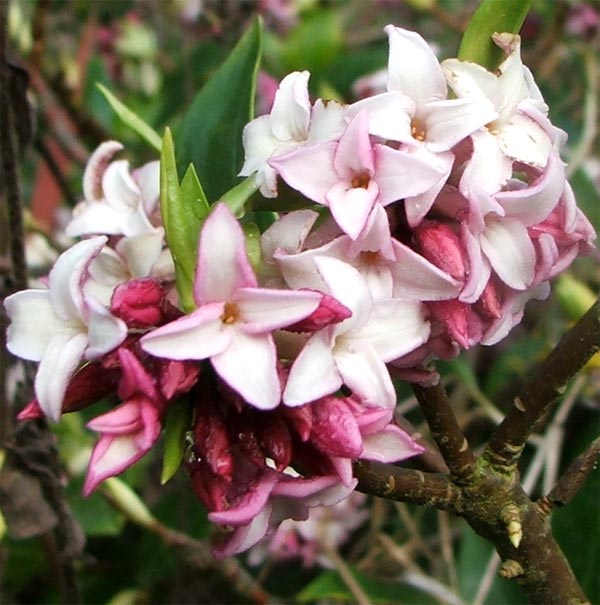
Daphne


is easily grown and very fragrant. As ornamental as
orange or lemon and very free flowering. Give almost no water in winter,
or store in cellar. Plants good for many years.

Browallia


A very attractive flowering shrub, easily grown in a cool
room, with plenty of sunlight. Sow seeds in 4-inch pots in August,
thinning to three or four. Repot to 6 inches. Cuttings make good plants.
Best grown as standards.

Bouvardia


Pink, white or red flowers, sweet scented. Propagated by
root cuttings, but as the plants are good for a number of years, the
best way is to get them from the florist. Old plants may be divided,
small enough to go into number three pots. Give either cuttings or
divisions about sixty degrees at night after potting, which should be in
spring, until put outdoors. Keep pinched to shape. Then bloom from late
fall to February.

Daphne, Genista, Grevillea robusta - SHRUBS


Daphne --_D. odora_ is easily grown and very fragrant. As ornamental as
orange or lemon and very free flowering. Give almost no water in winter,
or store in cellar. Plants good for many years.


Genista --A beautiful evergreen shrub, bearing freely in spring
clusters of pea-shaped yellow flowers, richly fragrant. Cut back after
flowering, and in fall put in a cold room, forty degrees, or a frame,
giving several weeks rest. Cuttings may be rooted readily in spring,
when pruning the plants.

Grevillea robusta --The Silk Oak is grown with the greatest ease and
makes an extremely graceful, beautiful plant, either by itself or as a
center for fern dishes, etc. Sow in March and grow on with frequent
shifts.

Bouvardia, Browallia, - SHRUBS


Bouvardia --Pink, white or red flowers, sweet scented. Propagated by
root cuttings, but as the plants are good for a number of years, the
best way is to get them from the florist. Old plants may be divided,
small enough to go into number three pots. Give either cuttings or
divisions about sixty degrees at night after potting, which should be in
spring, until put outdoors. Keep pinched to shape. Then bloom from late
fall to February.

Browallia --A very attractive flowering shrub, easily grown in a cool
room, with plenty of sunlight. Sow seeds in 4-inch pots in August,
thinning to three or four. Repot to 6 inches. Cuttings make good plants.
Best grown as standards.

B. elata - is especially valuable because of its deep blue flowers.
B.Jamesonii - is orange. Roezlii and Grandiflora, blue or white.

Aucuba, Azalea - SHRUBS


Aucuba --The Gold Dust Plant: one of the beautiful shrubs and
especially valuable for decoration because doing well in such shaded
positions as inner rooms, or by doorways. Strong tip cuttings--six to
ten inches--can be rooted readily in the fall. Give a soil on the heavy
side.

Azalea --The azalea is the most beautiful flowering shrub--if not the
most beautiful of all winter flowering plants. With proper treatment an
azalea should do service for several years, becoming more splendid each
season.

You will probably get your plant when it is in full bloom. At this time,
and during the whole growing season, it requires abundant water. The
best way to make sure of giving it a thorough one, is to stand it for
half an hour in a pail of water. Keep it in a rather cool place, say
forty-five at night, and the flowering season, which should last several
weeks, will be prolonged.

With the azaleas you must do the work for next year's success as soon as
the flowering season is over. After repotting, keep in a temperature of
fifty to fifty-five degrees at night.

There are three types of azalea suitable for winter blooming, the
Indian, Ghent and Mollis, of each of which there are several kinds. The
Indian type has the advantage of not blooming without its leaves, as the
others do. The best way to select the varieties wanted is to purchase
when in bloom. It will not pay the amateur to attempt propagation.

Acalypha, Aralia, Ardisia - SHRUBS


_Acalypha_--Valuable for its variegated foliage. For use in the house
root cuttings in early fall. The old roots, after cutting back, may be
kept on the dry side to furnish cuttings in spring for the garden
plants.

_Aralia_--Aralia (_Fatsia Japonica_) and _A. J. variegata_, especially
the last, are two of the most decorative plants one may have. They are
not widely known--very likely because they are difficult to propagate.
Easily kept. Get from florist.

_Ardisia_--(_Ardisia crenulata_) is the best red berried plant for the
house. It is a dwarf, with very beautiful dark green foliage. While kept
healthy it will be laden constantly with its attractive clusters of
berries, one crop lasting over the next. Seedlings make the best plants,
and are readily grown. Sow in January to April, and plants will flower
within a year and thereafter be perpetually decorated. Old plants can be
topped (see page 86) and make fine specimens. By all means give the
ardisia a place in your collection.

Abutilon --The Flowering Maple


(Abutilon) is an old favorite, but well
worthy of continued popularity. It is practically ever-blooming, which
at once marks it as highly desirable. The pendulous flowers are very
pretty, coming in shades of pink, white, yellow and dark red. The
foliage is also beautiful, especially that of the variegated varieties,
than which very few plants are more worthy of a place in the window
gardener's collection.

New plants, which will grow and bloom very rapidly, are propagated by
cuttings rooted in the fall or spring. Give the plants when indoors
plenty of light. Old plants, for which there is not room in the window
garden, may be wintered almost dry in a cool place and allowing the
leaves to fall off.

SHRUBS - gardener's collection.

The shrubs of dwarf habit available for growing inside in winter are
numerous and valuable. They include a number of the most attractive
plants one may have, and as a rule will stand more hardships in the way
of poor light, low temperature and irregular attention than any of the
other flowering plants.

They differ from the other flowering plants in several ways. They are
harder wooded; the resting spell is more marked and they make growth

and
store up energy for flowering _ahead_ of the blossoming season.

Their differences in habit of growth naturally involve differences in
treatment. In the first place, they are harder to propagate; in many
cases it is better for the amateur to get plants from the florist than
to try to raise them. This is not such a disadvantage as might at first
appear, because most of them can be kept for several years, only
improving with age.

The "snapping" test (page 30) will not apply to many of the shrubs when
taking cuttings. In this case they are made from the new growth after
it becomes firm and well ripened. It should be fresh and plump, and
rooting will be made more certain by bottom heat. Often cuttings of
hard-wooded plants, such as oleander, are rooted in plain water, in
wide-mouthed bottles hung in a warm place in the sun, the water being
frequently renewed or kept fresh with a lump or so of charcoal.

Many of the shrubs are beautiful for summer blooming on the veranda or
in large pots or tubs. These may be kept over winter safely by drying
off and keeping in a frost-proof cellar where they will get little
light. In this way they will come out again in the spring, just as hardy
shrubs do out-of-doors. The earth should not be allowed to get dust dry,
but should not be more than slightly moist; very little, and often no,
water is required, especially if mulching of some sort is put over the
earth in pots or boxes; but it should not be any material that would
harbor rats or mice. The leaves will fall off, but this is not a danger
signal, such plants being deciduous in their natural climates. It will
be best to keep such plants as are to be stored in the cellar, from the
time there is danger of frost until about November first, in an
outbuilding or shed, where they will not freeze. This makes the change
more gradual and natural. The temperature of the cellar should be as
near thirty-four to thirty-eight degrees as possible. About March first
will be time to start giving most plants so treated heat, light and
water again, the latter gradually.

The fact that growth is made in advance of the flowering period means
that the summer care and feeding of such plants is very important.
Plenty of water must be given, and frequent applications of liquid
manure or fertilizers, or top dressing. Flowering shrubs that bloom on
last season's wood, like hydrangeas, should be pruned just after
blooming.

Pansy, Salvia, Piqueria or Stevia serrata, Stocks - FLOWERING PLANTS


Pansy --If wanted for winter blooming, take cuttings or start from
seed, as described for Daisy (_Bellis perennis_). The seed bed must be
kept cool and shaded.


Salvia --One of the most brilliant of all flowering plants. For winter
make cuttings in August, or take off suckers with roots at base of
plant. They like heat. Keep thoroughly sprayed to ward off red spider.

Piqueria or Stevia serrata --Another fragrant flower. Root cuttings in
January or February and grow on for blooming from November to February.


Stocks --What I said about snapdragons on page 64 might well be
repeated here. Start from seed in August or September. They are very
easily grown. In addition to their beauty--they resemble a spray of
small roses--is their entrancing fragrance. Only the double sorts are
good. There are many fine new sorts. Abundance, a beautiful delicate
pink, will be sure to arouse your enthusiasm.
Blogalaxia Tags: